Why Are There Suddenly So Many Lash Serums? The Truth Most Brands Won’t Tell You
Why Are There Suddenly So Many Lash Serums? A UK Pharmacist Explains
Lash serums seem to be everywhere.
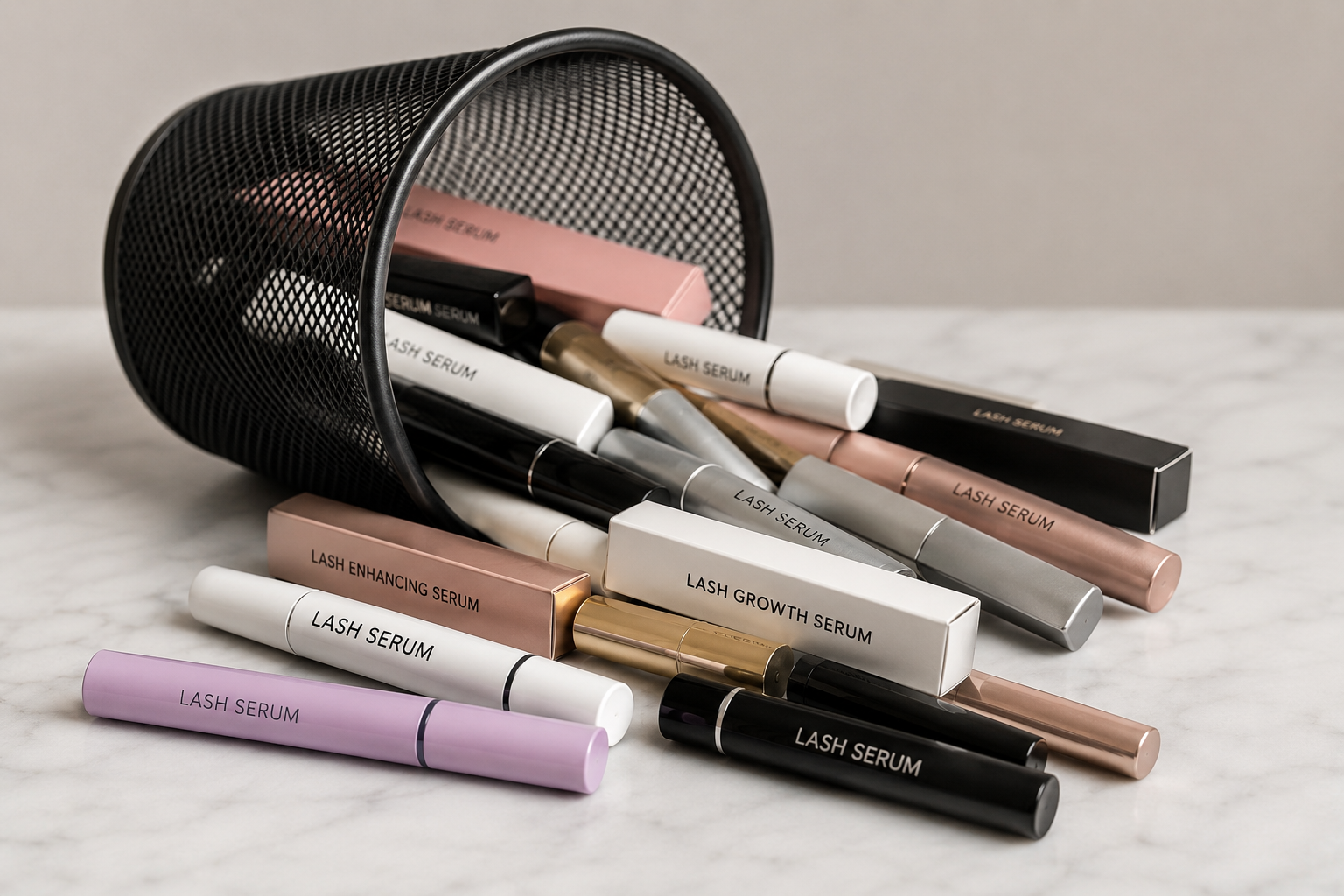
New brands are launching almost every week, often with similar packaging, similar ingredient lists and remarkably similar promises. One serum claims to deliver fuller-looking lashes. Another promises stronger, healthier-looking lashes. A third appears online with almost the same message a few days later.
It raises an obvious question:
Why are there suddenly so many lash serums, and are they genuinely different from one another?
The answer lies partly in growing consumer demand, but also in how easy it has become to launch a cosmetic product using private label and white label manufacturing.
There is nothing automatically wrong with private label cosmetics. Some are produced by experienced, reputable manufacturers and can be perfectly good products.
However, not every lash serum has been individually developed from the ground up for the brand whose name appears on the bottle.
That distinction matters.
As a UK pharmacist and Clinical Director at Nuur Cosmetics, I believe consumers should understand how lash serums are developed, what an ingredient list can and cannot tell you, and what questions are worth asking before applying a product so close to the eyes.
Why has the lash serum market grown so quickly?
The popularity of lash serums has increased for several reasons.
Consumers are increasingly looking for alternatives to lash extensions, false lashes and repeated lash lifts. Social media has also made dramatic lash transformations highly visible, creating greater demand for products that support the appearance of naturally longer, fuller and healthier-looking lashes.
At the same time, launching a cosmetic brand has become significantly easier.
A business no longer necessarily needs to employ its own cosmetic chemist or spend years developing a completely original formula. Cosmetic manufacturers can provide businesses with ready-made products that are already available for private label or white label use.
A new brand may be able to:
- select an existing lash serum formula
- choose a bottle from a packaging catalogue
- add its own logo and branding
- approve a box design
- begin selling the product
This can make it possible to launch a new lash serum relatively quickly.
It also helps explain why so many serums enter the market with similar formulas, similar packaging and similar marketing messages.
What is a private label lash serum?
A private label lash serum is usually manufactured by a third-party cosmetic manufacturer and sold under another company’s branding.
Depending on the manufacturer and agreement, the brand may be able to customise certain features, such as the packaging, fragrance, texture or a small number of ingredients.
In other cases, the underlying formula may already be sold to several different businesses.
White label is often used to describe an even more standardised arrangement in which a largely finished product is supplied to different brands with minimal changes beyond the label and packaging.
The exact use of these terms can vary across the cosmetics industry, but the basic principle is similar. The company shown on the front of the packaging is not necessarily the company that originally created the formulation.
Again, this does not mean the product is automatically poor quality.
Private label manufacturing can give smaller businesses access to professional production facilities, regulatory support and established formulations. The important issue is not simply whether a product is private label.
The more useful question is:
How much thought, expertise and accountability sits behind the finished product?
Are all lash serums basically the same?
No, but it is understandable why consumers might think they are.
Many lash serums use similar categories of ingredients, including:
- peptides
- humectants
- conditioning agents
- vitamins
- botanical extracts
- amino acids
- preservatives
Seeing the same ingredient across two formulas does not mean those products are identical.
An ingredient list, also known as an INCI list, tells you which cosmetic ingredients are included in a product. However, it does not usually tell the consumer the exact concentration of every ingredient.
That means two products may display similar ingredients while containing them at different levels.
The overall performance and user experience of a cosmetic formula can also be influenced by:
- ingredient concentrations
- raw material specifications
- ingredient compatibility
- formulation pH
- product stability
- preservation
- texture
- packaging compatibility
- manufacturing controls
- the way ingredients are combined within the complete formula
A cosmetic product should therefore be assessed as a formulation, not merely as a list of fashionable ingredients.
Why ingredient concentration matters
Consumers are increasingly good at recognising popular cosmetic ingredients.
A brand may highlight peptides, biotin, hyaluronic acid or botanical extracts on the front of its packaging. However, the presence of an ingredient alone does not reveal how prominently it features within the overall formulation.
Cosmetic ingredients can be used for different purposes and at different concentrations.
Some may form an important part of the formula. Others may be included at much lower levels.
This is one reason why simply counting the number of peptides, extracts or vitamins listed on a product page is not a reliable way to identify the best lash serum.
A longer ingredient list is not automatically better.
A shorter ingredient list is not automatically better either.
What matters is whether the formula has been designed coherently, with each ingredient serving a useful function.
Why formulation is more than choosing popular ingredients
It is relatively easy to create an impressive-sounding ingredient list.
The more difficult task is deciding:
- which ingredients belong in the formula
- which ingredients do not
- how they complement one another
- how the formula should feel during daily use
- whether it is appropriate for repeated application around the lash line
- how the product should be preserved
- how it should remain stable throughout its intended shelf life
This is where the difference between product selection and genuine product development becomes clearer.
Selecting a finished formula from a catalogue is not the same process as beginning with a specific formulation objective and building the product around it.
Both approaches can produce a legal cosmetic product. They are simply not the same development journey.
How Nuur Lash was developed differently
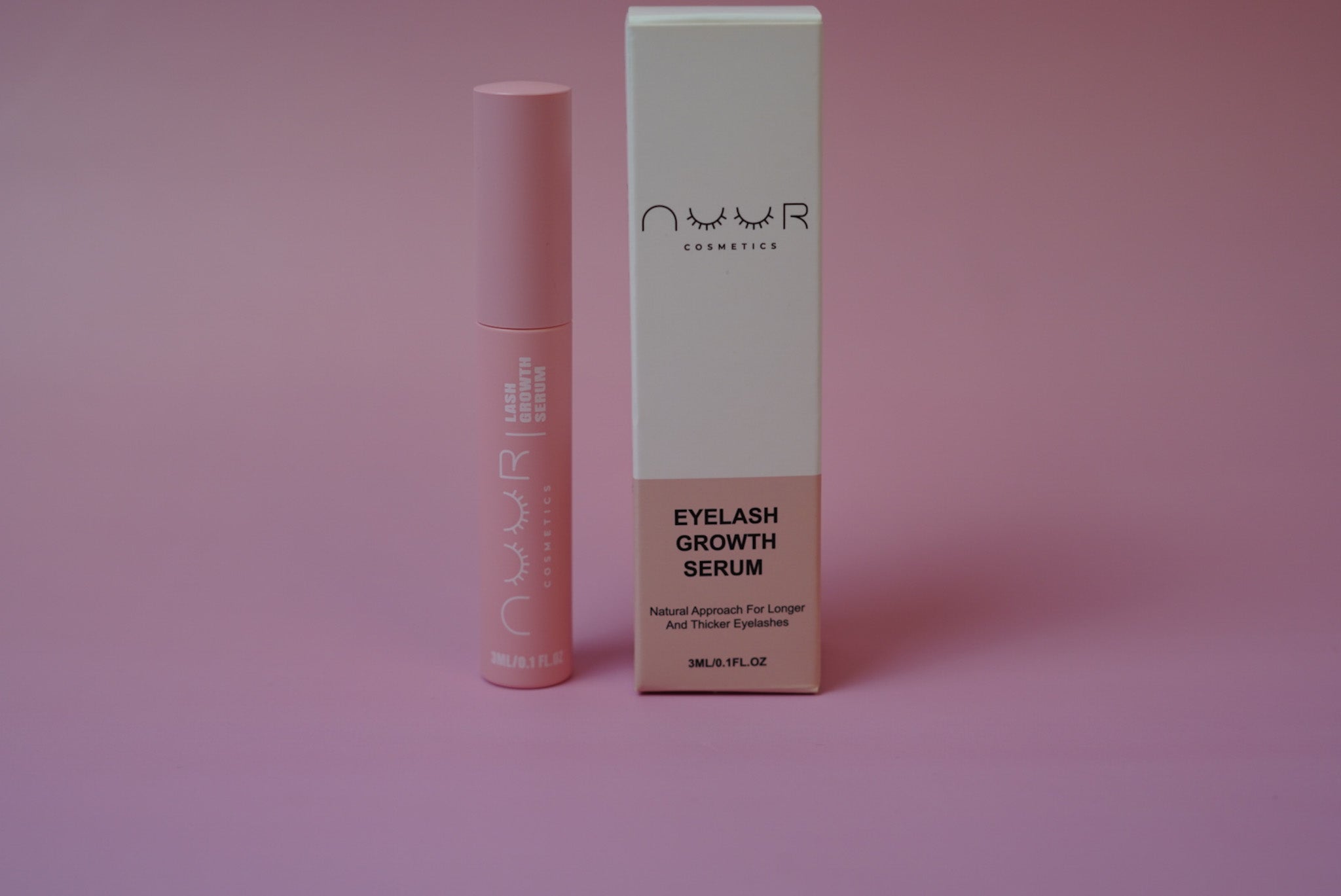
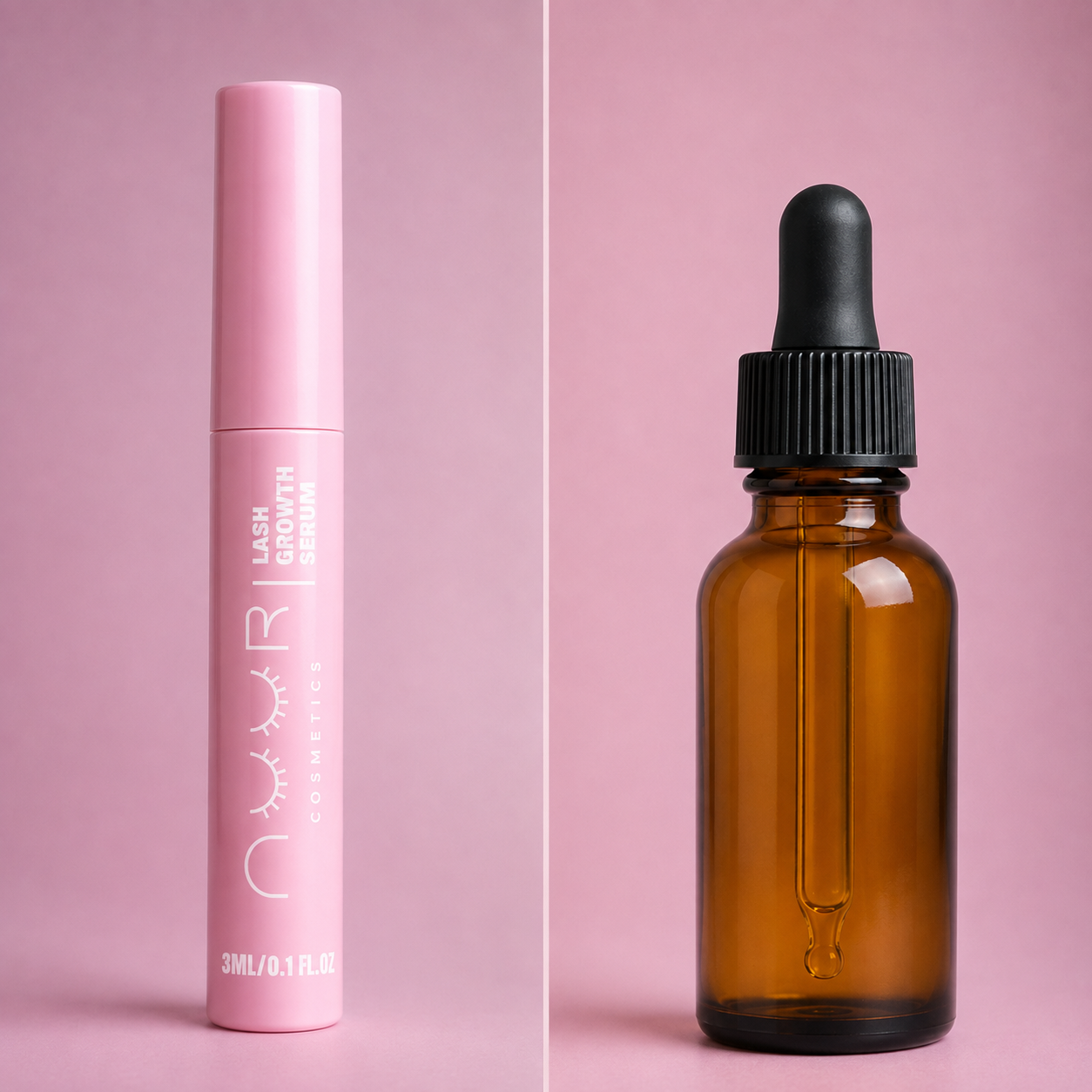
Nuur Lash was not created by choosing a generic finished lash serum and placing the Nuur name on it.
We developed the formula from the ground up around a clear objective:
To create a prostaglandin-free lash serum designed to support the appearance of longer, fuller and healthier-looking natural lashes, while remaining suitable for consistent nightly use.
We did not begin by asking which ingredients were receiving the most attention on social media.
We began by asking:
What would we want in a lash serum that our customers, friends and family might apply every night over the long term?
That question shaped the formulation philosophy.
We focused on creating a balanced formula combining multiple peptides, selected botanical ingredients, hydration support and conditioning ingredients.
Every ingredient needed a purpose.
The goal was not to produce the longest possible ingredient list. It was to create a considered formula in which the ingredients made sense together.
Why Nuur chose a prostaglandin-free approach
Some lash serums use prostaglandin analogues or prostaglandin-related ingredients.
These products can be attractive to consumers seeking dramatic-looking results, but some users specifically prefer to avoid this ingredient category.
Nuur Lash was intentionally developed without prostaglandin analogues.
Instead, we chose a cosmetic formulation centred around peptides, conditioning ingredients, botanical extracts and hydration.
This reflects our wider philosophy.
We wanted Nuur Lash to be a product designed around consistent use and the appearance of healthy natural lashes, rather than positioning it around the fastest or most extreme possible transformation.
No responsible cosmetic brand should promise that every customer will achieve identical results. Lash appearance is influenced by factors such as genetics, the natural lash cycle, age, health, cosmetic habits, consistency and how the product is applied.
Our role is to communicate realistic expectations and provide a thoughtfully formulated product.
Why sustainable-looking results matter
The lash growth cycle takes time.
A lash serum is not an overnight treatment, and it cannot force every lash to change at once.
Consistent use supports lashes as they move through their natural cycle. This is why visible improvements generally develop gradually rather than immediately.
With Nuur Lash, customers may begin noticing visible improvements after approximately four to six weeks of consistent application, while fuller results may take between six and twelve weeks.
Individual experiences vary.
Maintaining the appearance of the results also requires continued use. This is not unique to Nuur. It reflects the fact that eyelashes naturally progress through a cycle of growth, transition and shedding.
The objective is not to create permanent change after one bottle.
It is to support the appearance of the natural lashes while the serum continues to form part of the user’s routine.
The problem with choosing a serum based only on marketing
The lash serum market contains many powerful marketing messages:
“Miracle growth.”
“Dramatic lashes in days.”
“Clinically proven.”
“Guaranteed results.”
Consumers should approach absolute claims with caution.
A cosmetic product should not be presented as though it can guarantee the same biological response in every user. Claims should be supported, appropriately worded and consistent with the product’s intended cosmetic function.
When comparing lash serums, look beyond dramatic before-and-after images.
Ask:
- Does the brand explain how the serum was developed?
- Is the complete ingredient list easy to find?
- Does the company provide clear application instructions?
- Are the expected results realistic?
- Does the brand distinguish between cosmetic appearance claims and medical treatment claims?
- Is there a qualified person involved in the brand?
- Does the company educate customers about possible sensitivities?
- Is the company easy to contact if something goes wrong?
- Does the brand explain whether its formula contains prostaglandin-related ingredients?
- Is the product properly notified and assessed for sale in its intended market?
A responsible brand should be able to answer reasonable questions about its product without relying entirely on slogans.
Can two brands sell the same lash serum?
It is possible for more than one beauty brand to use the same or a very similar base formulation, particularly when purchasing from a private label or white label manufacturer.
The external packaging, brand story, pricing and marketing may be different even when the underlying products are closely related.
Consumers will not always be able to determine this from packaging alone.
Similar ingredient lists do not prove that two formulas are identical, but highly similar INCI lists, product descriptions and claims may naturally raise questions about how independently the products were developed.
This is one reason brand transparency matters.
A company should not be criticised merely for using contract manufacturing. Almost all cosmetic brands rely on specialist external manufacturers to some extent.
The real distinction is between using a professional manufacturer to produce a brand’s own carefully developed specification, and simply selecting an existing catalogue product with minimal involvement in its formulation.
Is private label bad?
No.
Private label is a manufacturing model, not a measure of quality.
A carefully selected private label product from a reputable manufacturer may be better than a poorly designed custom formula.
Likewise, calling a product “custom formulated” does not automatically make it effective, suitable or superior.
Consumers should be wary of simple narratives in either direction.
The strongest indicators of a trustworthy lash serum brand are usually:
- transparency
- realistic claims
- formulation knowledge
- regulatory responsibility
- clear directions
- responsive customer support
- consistency between the brand’s marketing and the product itself
The important question is not whether a manufacturer was involved.
All professionally produced cosmetics require manufacturing expertise.
The question is how deeply the brand was involved in deciding what the product should be.
What makes Nuur Lash different?
Nuur Lash was developed around five core principles.
1. A prostaglandin-free formula
We deliberately avoided prostaglandin analogues and built the formula around alternative cosmetic ingredients.
2. A multi-ingredient formulation strategy
The formula combines selected peptides, botanical extracts, hydration and conditioning support rather than relying on one headline ingredient.
3. Every ingredient has a purpose
Ingredients were not added merely to make the label appear longer or more impressive.
4. Realistic expectations
We communicate gradual results based on consistent application and the natural lash cycle.
5. Clinician-led education
Nuur Cosmetics was founded by UK healthcare professionals. We believe consumers deserve clear explanations, responsible claims and accessible support.
Being clinician-founded does not mean a cosmetic product becomes a medicine or that results can be guaranteed.
It means we approach product development and communication with a strong sense of responsibility.
The bottom line
There are so many new lash serums because consumer demand has grown and cosmetic manufacturing has made it easier than ever to bring a product to market.
Some brands develop individual formulations around a specific philosophy.
Others choose an existing private label or white label product and focus primarily on branding and marketing.
Neither route automatically tells you whether a serum is good or bad.
However, they are not the same.
At Nuur Cosmetics, we did not want to launch another generic serum simply because lash products were becoming popular.
We wanted to understand what should go into the formula, why it should be there and how the complete product would fit into a consistent, long-term lash care routine.
Nuur Lash was therefore developed from the ground up as a prostaglandin-free, multi-peptide lash serum designed to support longer, fuller and healthier-looking natural lashes with continued use.
Because when a product is applied close to your eyes every evening, the thinking behind the formula matters just as much as the name printed on the bottle.
Frequently asked questions
Why are there so many lash serum brands?
Demand for natural lash enhancement has increased, while private label manufacturing has made it quicker and more affordable for businesses to launch cosmetic products.
What is a white label lash serum?
A white label lash serum is generally a pre-existing formula that can be sold by different businesses under their own branding, often with limited changes to the underlying product.
What is a private label lash serum?
A private label serum is manufactured by a third-party cosmetic producer for sale under another company’s brand. The level of customisation can vary considerably.
Are private label lash serums unsafe?
Not necessarily. Reputable manufacturers can produce safe, compliant and high-quality private label cosmetics. The finished product, regulatory compliance and brand transparency matter more than the manufacturing model alone.
Do lash serum ingredient concentrations matter?
Yes. The presence of an ingredient does not by itself reveal how much is used or how important it is within the complete formula. Concentration, compatibility, stability and overall formulation design can all matter.
How can I tell whether two lash serums are the same?
Consumers cannot always know with certainty. Similar INCI lists, packaging formats, product textures and marketing descriptions may indicate similarities, but they do not conclusively prove that two formulas are identical.
Was Nuur Lash white labelled?
No. Nuur Lash was developed from the ground up around Nuur’s own formulation objectives rather than selected as a finished generic lash serum from a white label catalogue.
Is Nuur Lash prostaglandin-free?
Yes. Nuur Lash is formulated without prostaglandin analogues.
How long does Nuur Lash take to work?
Some users may begin noticing visible improvements after four to six weeks of consistent nightly application. Fuller results may take between six and twelve weeks. Individual results vary.
Do lash serum results last forever?
Lashes naturally grow, transition and shed. Continued use is normally required to maintain the appearance of results achieved while using a cosmetic lash serum.
Written by Esa Badr, MPharm, Independent Prescriber
Clinical Pharmacist & Co-founder, Nuur Cosmetics

Written by Nuur Cosmetics